STORM Microscopy: Illuminating the Nanoscale World Beyond the Diffraction Limit
Introduction
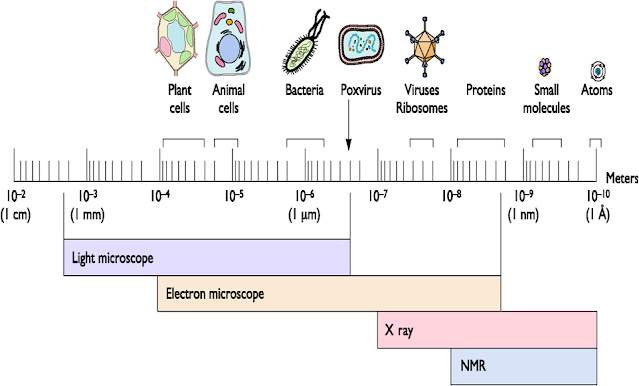
The ability to visualize biological structures at the nanoscale has transformed modern life sciences. Conventional optical microscopy, despite its versatility and ease of use, is fundamentally limited by the diffraction of light, restricting its resolution to approximately 200–250 nm laterally and 500–700 nm axially. Many cellular components, including protein complexes, cytoskeletal filaments, membrane receptors, and nucleic acid structures, exist well below this resolution limit.
To overcome this challenge, researchers developed a family of super-resolution microscopy techniques that bypass the diffraction barrier. Among these, STORM (Stochastic Optical Reconstruction Microscopy) has emerged as one of the most influential methods. Introduced in 2006, STORM enables visualization of biological structures with resolutions as fine as 20–30 nm, allowing scientists to explore the intricate architecture of cells with unprecedented clarity.
This article explains the principles, instrumentation, workflow, applications, advantages, limitations, and future prospects of STORM microscopy.
What is STORM Microscopy?
STORM (Stochastic Optical Reconstruction Microscopy) is a fluorescence-based super-resolution imaging technique that reconstructs high-resolution images by precisely localizing individual fluorescent molecules.
Instead of imaging all fluorophores simultaneously, STORM activates only a small, random subset of fluorescent molecules at any given time. Since these molecules are spatially separated, their positions can be determined with nanometer precision. Repeating this process thousands of times generates a complete super-resolution image.
Unlike traditional microscopy that directly forms an image, STORM creates an image computationally from millions of localized fluorescent events.
The Diffraction Limit: Why STORM Was Needed
According to Ernst Abbe's diffraction theory, the smallest distance distinguishable by a light microscope is:
Resolution = λ / (2 × NA)
where:
λ = wavelength of emitted light
NA = numerical aperture of the objective lens
For visible light, this corresponds to approximately:
200–250 nm lateral resolution
500–700 nm axial resolution
Many biological structures are much smaller:
| Biological Structure | Approximate Size |
|---|---|
| DNA double helix | 2 nm |
| Ribosome | 20–30 nm |
| Virus | 50–150 nm |
| Nuclear pore complex | 100 nm |
| Microtubule diameter | 25 nm |
These structures cannot be clearly resolved using conventional fluorescence microscopy.
STORM overcomes this limitation through stochastic fluorophore switching and precise localization.
Principle of STORM Microscopy
The core principle is remarkably elegant.
Step 1: Labeling
The biological specimen is labeled using photoswitchable fluorescent dyes.
Examples include:
Alexa Fluor 647
Cy5
Cy3
Atto dyes
These dyes can repeatedly switch between fluorescent ("ON") and non-fluorescent ("OFF") states.
Step 2: Sparse Activation
A weak activation laser turns on only a tiny fraction of fluorophores.
Instead of millions of overlapping fluorescent molecules, only a few isolated molecules emit light.
Step 3: Imaging Individual Molecules
Each activated molecule produces a diffraction-limited spot.
Although the spot itself is about 250 nm wide, its center can be mathematically determined with much higher precision (typically 10–20 nm).
This process is known as single-molecule localization.
Step 4: Switching OFF
The activated fluorophores return to their dark state.
Another random subset becomes active.
The process repeats thousands of times.
Step 5: Image Reconstruction
Millions of localized molecular coordinates are combined into a single high-resolution image.
The final image resembles a molecular map of the sample.
Instrumentation Required
A typical STORM microscope consists of:
1. High Numerical Aperture Objective
Usually:
100× oil immersion
NA 1.4–1.49
Higher NA improves localization accuracy.
2. Laser Sources
Multiple lasers are commonly used:
405 nm (activation)
561 nm
647 nm
750 nm (excitation)
3. Sensitive Camera
High-performance cameras include:
EMCCD cameras
Scientific CMOS (sCMOS)
These cameras detect extremely weak fluorescence from single molecules.
4. Optical Filters
High-quality dichroic mirrors and emission filters isolate fluorescence signals.
5. Vibration Isolation
Since localization accuracy is measured in nanometers, mechanical stability is critical.
6. Computer and Reconstruction Software
Specialized software performs:
Molecule localization
Drift correction
Image reconstruction
Quantitative analysis
Popular software includes ThunderSTORM, Picasso, and SMAP.
Photoswitching: The Heart of STORM
The success of STORM depends on photoswitchable fluorophores.
Fluorophores cycle between:
ON state → emits fluorescence
OFF state → temporarily dark
ON again → emits fluorescence
This switching is achieved using:
Laser illumination
Reducing imaging buffers
Oxygen scavenging systems
Without photoswitching, all fluorophores would emit simultaneously, preventing precise localization.
Localization Precision
Localization accuracy depends on:
Number of photons detected
Background noise
Camera sensitivity
Optical stability
Typical localization precision:
10–20 nm
Final image resolution:
20–30 nm
Some optimized systems achieve:
<10 nm localization precision
Imaging Workflow
A typical STORM experiment involves:
Prepare biological sample.
Label target proteins with photoswitchable dyes.
Mount sample in switching buffer.
Illuminate using activation laser.
Record 10,000–50,000 image frames.
Detect individual fluorophores.
Localize molecular centers.
Correct sample drift.
Reconstruct the super-resolution image.
Perform quantitative analysis.
Types of STORM
2D STORM
Produces high-resolution images in the x–y plane.
Resolution:
20–30 nm
3D STORM
Introduces optical modifications (such as astigmatism) to estimate axial positions.
Resolution:
Lateral: 20–30 nm
Axial: 40–60 nm
Multicolor STORM
Uses different fluorophores to simultaneously image multiple proteins.
Example:
Actin (green)
Tubulin (red)
Mitochondria (blue)
Live-cell STORM
Captures dynamic cellular processes, though it is technically challenging due to acquisition speed and phototoxicity.
Applications of STORM Microscopy
Cell Biology
STORM enables visualization of:
Cytoskeleton
Cell membrane
Organelles
Protein complexes
Endosomes
Lysosomes
Neuroscience
Researchers study:
Synaptic proteins
Dendritic spines
Neurotransmitter receptors
Axonal organization
Cancer Research
STORM reveals:
Receptor clustering
Tumor biomarkers
Nuclear organization
Chromatin remodeling
Microbiology
Applications include:
Bacterial cell walls
Biofilm architecture
Protein localization
Viral entry mechanisms
Virology
STORM is widely used to study:
Virus assembly
Capsid structure
Viral protein distribution
Host–virus interactions
Immunology
Researchers investigate:
Immune synapses
T-cell receptor organization
Antibody binding
Antigen presentation
Structural Biology
STORM bridges the gap between conventional microscopy and electron microscopy by providing nanoscale structural information while preserving fluorescence-based molecular specificity.
Advantages of STORM
Breaks the diffraction limit.
Achieves 20–30 nm spatial resolution.
Enables single-molecule localization.
Highly quantitative.
Compatible with multicolor imaging.
Suitable for fixed and selected live-cell imaging.
Provides molecular specificity through fluorescence labeling.
Uses standard optical microscope architecture with specialized modifications.
Limitations
Despite its strengths, STORM has several challenges:
Long acquisition times.
Complex image reconstruction.
Requires specialized fluorescent dyes.
Sensitive to sample drift.
Photobleaching can reduce image quality.
Limited imaging depth in thick tissues.
Live-cell imaging remains technically demanding.
High-end instrumentation and expertise are required.
STORM vs Other Super-Resolution Techniques
| Technique | Typical Resolution | Main Principle | Strengths | Limitations |
|---|---|---|---|---|
| STORM | 20–30 nm | Stochastic localization | Highest molecular precision | Slow acquisition |
| PALM | 20–30 nm | Photoactivatable fluorescent proteins | Ideal for genetically encoded labels | Limited fluorophore selection |
| SIM | ~100 nm | Structured illumination | Fast and gentle imaging | Lower resolution |
| STED | 30–70 nm | Stimulated emission depletion | Real-time imaging | Expensive lasers and optics |
Future Directions
Advances in fluorophore chemistry, adaptive optics, artificial intelligence, and computational image reconstruction are rapidly expanding the capabilities of STORM. Faster cameras, improved photoswitchable dyes, and machine learning–based localization algorithms are enabling higher throughput, lower phototoxicity, and increasingly robust live-cell imaging. Integration with techniques such as cryogenic microscopy and correlative light and electron microscopy (CLEM) promises even deeper insights into cellular ultrastructure.
Conclusion
STORM microscopy has revolutionized biological imaging by enabling researchers to visualize structures at the nanometer scale that were once hidden by the diffraction limit of light. Through stochastic activation and precise localization of individual fluorophores, STORM provides unprecedented detail of molecular organization within cells. Its applications span cell biology, microbiology, neuroscience, immunology, virology, and cancer research, making it one of the most powerful tools in modern biomedical science.
Although challenges such as long acquisition times and complex data processing remain, continuous improvements in imaging technology and computational methods are making STORM increasingly accessible. As super-resolution microscopy continues to evolve, STORM will remain a cornerstone technique for uncovering the molecular architecture of life with extraordinary precision.